BREAKTHROUGHS
Par HEC Paris
Réseau : Podcasts HEC
Épisodes
88 épisodes · page 3 sur 3
« L' achat de MGM va permettre à Amazon d'alimenter le trafic sur sa plate-forme généraliste »
Il y a un mois, Amazon fait un coup d'éclat spectaculaire, en annonçant l’achat du studio hollywoodien MGM pour plus de sept milliards d’euros. Quelles conséquences pour le monde du cinéma et son économie ? Directeur du MS Médias, Arts et Création à HEC Paris, Thomas Paris analyse la portée de cet événement. Il a récemment cosigné avec Philippe Chantepie « L’économie du cinéma », publié par La Découverte.
Ce podcast a été enregistré le 9 juin 2021.
Hosted on Acast. See acast.com/privacy for more information.
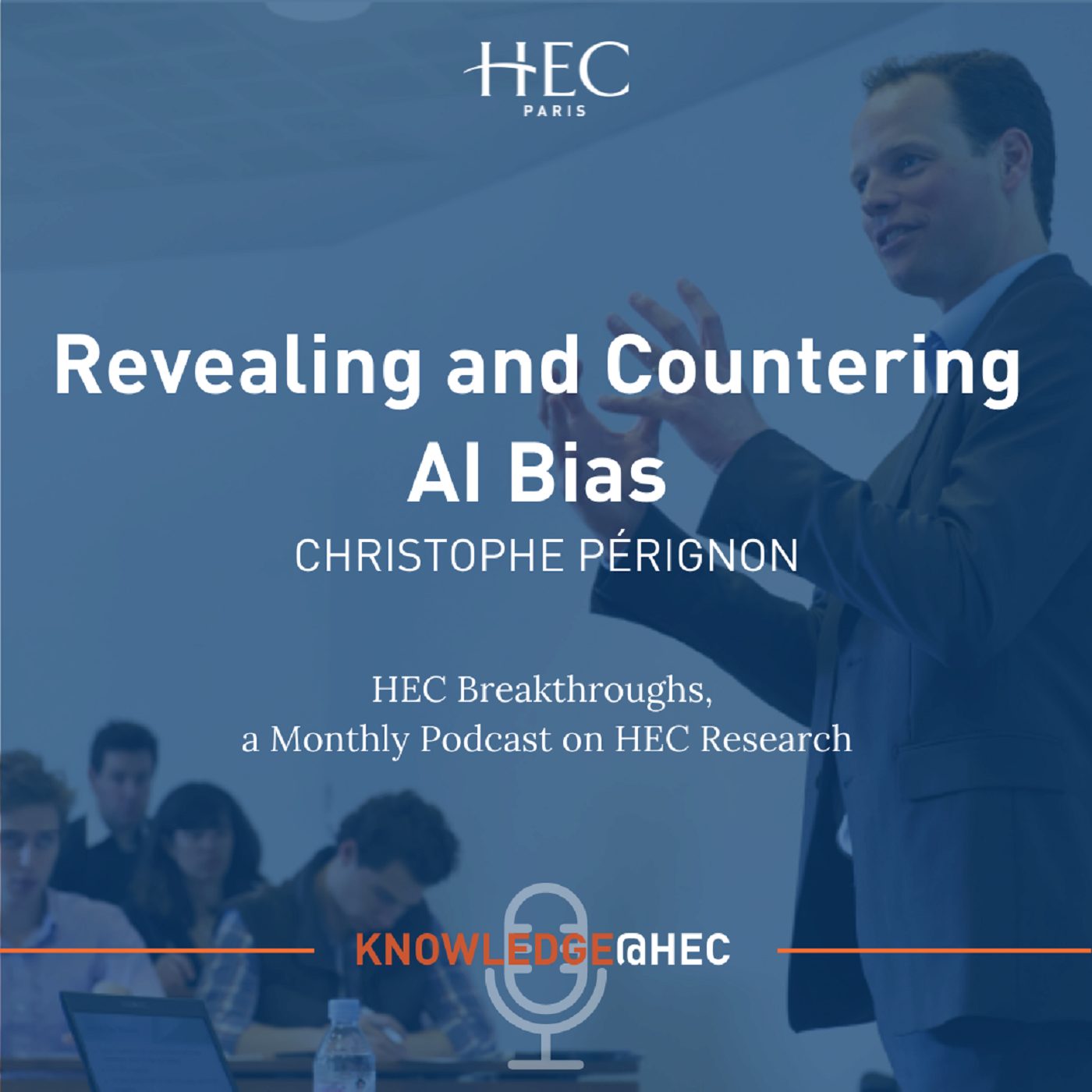
Revealing and Countering AI Bias
A large body of empirical evidence points to bias in access to credit. This is stigmatizing women, ethnic minorities and consumers from certain geographical zones. Nowadays, algorithms and machine-learning techniques could be unintentionally exacerbating this bias. HEC Associate Dean for Research, Christophe Pérignon, describes these challenges - and new techniques he has developed to reduce bias impact. These techniques can be applied in banking, insurance, hiring, fraud detection and justice.
Hosted on Acast. See acast.com/privacy for more information.
Attack on Pfizer Vaccine Reflects Dangers of Influencer Marketing
An unknown advertising agency calling itself Fazze last month offered thousands of US dollars to social media influencers last month to smear the Pfizer vaccine. Two prominent influencers in Germany and France, respectively, refused to share its allegations with their hundreds of thousands of followers.
HEC Assistant Professor, Andreas Lanz, analyzes this new online affair in the light of his extensive research on influencer markets. He called on both governments and major content networks like Facebook, Instagram and Youtube to “play their part” in ending such disinformation campaigns.
Hosted on Acast. See acast.com/privacy for more information.
Is the Belarus Air Intervention the Ultimate Test of EU Foreign Policy?
The forced landing of a Ryanair airplane and the subsequent arrest of two Belarusians on May 23 has sparked a major diplomatic crisis between EU and US authorities and the Minsk government, as well as sanctions. But just how effective are these measures? HEC Professor Alberto Alemanno shares his analysis of the stand-off and its reflections on EU foreign policy. Recorded on June 1, 2021.
Hosted on Acast. See acast.com/privacy for more information.
Will NFTs Disrupt The Future Of The Art Market?
Why do non-fungible tokens (NFTs) have the potential to disrupt the art market? This new investment phenomenon came to light when an animated GIF of Nyan Cat, which is a meme of a flying pop-tart cat, sold for more than $500,000 US Dollars. Shortly after, musician Grimes sold her digital art for more than $6 million US Dollars. HEC Paris Associate professor of finance Christophe Spaenjers, explains how NFTs work and why they have become such big news for the investment world.
Hosted on Acast. See acast.com/privacy for more information.

The Microeconomic Impact of Different COVID-19 Lockdown Strategies
On March 31, 2021, French president Emmanuel Macron announced a four-week national lockdown, throwing the country into a similar situation slightly over a year ago. This time though, not all businesses are affected in the same way. HEC Paris Associate Professor of Economics Tomasz Michalski analyzes the possible microeconomic impact of the different lockdown strategies, and its eventual long-term effects.
Hosted on Acast. See acast.com/privacy for more information.
Quelles solutions pour lutter efficacement contre le changement climatique ?
Cinq ans après la signature de l'Accord de Paris sur le climat et alors qu'en France, un projet de loi Climat très contesté arrive en débat à l’Assemblée nationale, la communauté internationale ne semble toujours pas être à la hauteur du défi climatique. Pour dresser un état des lieux des solutions aujourd'hui sur la table pour réduire les émissions mondiales de gaz à effet de serre et contenir l’élévation des températures, nous avons interrogé Arnaud Van Waeyenberge, Professeur associé en droit à HEC Paris, dont une recherche récente porte sur l'efficacité des marchés carbone en tant qu'instruments de régulation pour lutter contre le changement climatique.
Hosted on Acast. See acast.com/privacy for more information.
GameStop: Hedge Funds vs Amateur Traders
Is the GameStop Affair a collective action revolting against major hedge funds, or is it just another form of speculation by amateur investors also aiming to become rich? In the course of one week, GameStop’s stock value had catapulted to an impressive 1600% rise from its previous value. This sudden steep climb up raises questions on stock market behavior, the actions of hedge fund investors, and the trading technique of short selling. HEC Paris professor of Finance Johan Hombert explains the mechanics behind the GameStop affair.
Hosted on Acast. See acast.com/privacy for more information.

Is Big Pharma Transparent Enough?
Are the efforts of transparency by the pharmaceutical industry sufficient to regain the trust of the world population? The COVID-19 pandemic has taken the world hostage since March 2020, yet there is hope that this health crisis may be vanquished this year, thanks to the approved vaccines by pharmaceutical companies such as Pfizer/BioNtech, Moderna and AstraZeneca. While there are ongoing vaccination drives, there are nonetheless doubts about these newly-developed vaccines, which compromises the effectiveness of vaccination campaigns already underway. HEC Paris professor Professor Vedran Capkun tells us why transparency is critical in this current context. He explains what the outcome of the production of these vaccines represents for the pharmaceutical industry.
Hosted on Acast. See acast.com/privacy for more information.
Prix Nobel d’économie : quel impact sur la recherche et la société ?
Le Prix Nobel d’Economie 2020 a récompensé Paul Milgrom et Robert Wilson de l’université de Stanford pour leurs recherches sur les enchères. Dans cet entretien, Jean-Edouard Colliard, professeur de finance à HEC Paris et auteur de "Les Prix Nobel d'Economie" aux Editions Repères, nous explique les recherches récompensées, ainsi que le protocole de sélection des Prix Nobel, et leur rôle dans l’économie, la société et la perception des économistes.
Hosted on Acast. See acast.com/privacy for more information.
In Trust We Believe
Is trust the key to a more inclusive world? In this two-part podcast, HEC Paris professor Hélène Löning first defines trust as the foundation that touches different aspects of our lives and clarifies why this quality is so essential for a positive recovery in the post-pandemic era. She then describes the three pillars of trust that drive diversity and inclusion in our society. Professor Löning will also draw on her research about entrepreneurial ecosystems to explain trust in the specific relationship between investors and entrepreneurs, and offers examples of how innovation hubs like Silicon Valley and Paris-Saclay, as well as business schools such as HEC Paris, play a critical role in building trust within this ecosystem.
Hosted on Acast. See acast.com/privacy for more information.
EU Deadlock : Will the EU Economic Recovery Plan Fail?
Poland and Hungary continue to oppose the rule of law mechanism linked to the European Union’s seven-year budget, which includes the 750-billion euro recovery fund to tackle the economic recession caused by the COVID-19 health crisis. As the EU stands at a deadlock, HEC Paris professor and expert on EU law, Alberto Alemanno, explains the rule of law mechanism and its importance in the governance of the European Union.
Hosted on Acast. See acast.com/privacy for more information.
2020 U.S. Presidential Elections: Where is America Headed?
On November 5, 2020, as the U.S. presidential election comes to a close, HEC Paris professors Jeremy Ghez and Chantal Carleton, and HEC Paris MBA candidate Megan Scullion, analyze the balance of power in American politics, the impact of the COVID-19 crisis on the elections and the future of economic and foreign policy in the United States of America. This discussion was moderated by Daniel Brown, Chief Editor at the HEC Paris Corporate Communications Department.
Hosted on Acast. See acast.com/privacy for more information.
2020 US Presidential Elections
With less than one month to go before the US Presidential Election Day, will American voters place priority on economic recovery above how the COVID-19 health crisis was managed? Before COVID-19, the US had been experiencing the longest economic expansion of its history with stock market rebound, lower unemployment rate and an increase in the average income of American households. After the virus hit the country severely, more than 20 million American jobs were lost, affecting society’s most vulnerable. Some industries thrived while others barely survived. Analysis by HEC Paris professor Jeremy Ghez.
Hosted on Acast. See acast.com/privacy for more information.
Relaunching the French Economy
The French government recently announced a 100-billion euro "France Relance" stimulus plan to revive the local economy from the impact of the COVID-19 pandemic. HEC Paris professor of Economics, Tomasz Michalski, analyzes the details of the recovery plan and its potential to restore the local economy.
Hosted on Acast. See acast.com/privacy for more information.
Terrorized by a virus? Time for a mental shift.
How to lead positive change within organizations in order to adapt to the coronavirus crisis, and yet continue to inspire and motivate people under such highly uncertain circumstances ? Mathis Schulte, Associate Professor in Management & Human Resources at HEC Paris, elaborates on social psychology’s terror management theory, and what we can do to prepare for the disruptive changes ahead of us.
Hosted on Acast. See acast.com/privacy for more information.
The Future of Energy Transition
The COVID-19 pandemic is an opportunity for us to rethink our current energy system. Jean-Michel Gauthier, professor and Executive Director of the Energy & Finance Chair at HEC Paris, explains the global consequences of the coronavirus and paints a picture of the future of the energy transition right here at the heart of the European Union.
Hosted on Acast. See acast.com/privacy for more information.
The Role of Corporate Social Responsibility (CSR) During A Crisis
The COVID-19 pandemic has placed companies under the microscope for how well they respond to the needs of a diverse set of stakeholders. HEC Paris professor of Strategy & Business Policy, Georg Wernicke, shares his perspective on how engagement in corporate social responsibility (CSR) activities, may affect firms’ well-being not only during the crisis, but also in its aftermath.
Hosted on Acast. See acast.com/privacy for more information.

Vers des business models plus durables ? Partie 2
Quel peut être le rôle des dirigeants et managers, en tant que véritables pilotes de l’économie? Hélène Löning, Professeur Associé à HEC Paris donne des clés pour gérer le court terme, le moyen terme et long terme. Dans cette deuxième partie du podcast, elle évoque la sortie de crise : entre incertitudes et opportunités comment élaborer des business models plus durables.
Hosted on Acast. See acast.com/privacy for more information.
Etre dirigeant d'entreprise, face à la crise : Partie 1
Quel peut être le rôle des dirigeants et managers, en tant que véritables pilotes de l’économie? Hélène Löning, Professeur Associé à HEC Paris donne des clés pour gérer le court terme, le moyen terme et long terme. Dans cette première partie du podcast, elle pose les enjeux et évoque l’urgence : trésorerie, supply chain et responsabilité.
Hosted on Acast. See acast.com/privacy for more information.

Leading Change Through Education
A call for change will be necessary in the wake of the Covid-19 crisis. HEC Paris professor Jeremy Ghez emphasizes on the role of higher education in preparing tomorrow’s leaders for the disruptive global environment to come.
Hosted on Acast. See acast.com/privacy for more information.

Dealing with Severe Uncertainty
HEC Paris professor Brian Hill defines severe uncertainty and clarifies how to make good, responsible and informed decisions under conditions of extreme incertitude such as the COVID-19 pandemic.
Hosted on Acast. See acast.com/privacy for more information.
Decision-making During A Crisis
The COVID-19 health crisis has a critical bearing on decision-making biases that may potentially influence the decisions we take today and in the future. Analysis by HEC Paris professor Anne-Sophie Chaxel.
Hosted on Acast. See acast.com/privacy for more information.
AI, Robots & The Future of Work in Times of COVID-19
The coronavirus pandemic has placed millions of employees under lockdown. Digital technology and new ways of working across time and space, become more critical. Sangseok You, HEC Paris professor of Information Systems, explains the relationship between humans and AI and robots, and its post-crisis impact on the future of work.
Hosted on Acast. See acast.com/privacy for more information.

Coronavirus: Making A Difference Through Social Media
As social distancing becomes the new normal, social media rally distant communities worldwide in moments of hope and inspiration. HEC Paris professor Kristine de Valck tells us how critical social media can be in times of crisis and how should marketers adopt their social media strategies in this extraordinary time.
Hosted on Acast. See acast.com/privacy for more information.

The Role of the European Central Bank in Supporting the Economy Through COVID-19
The European Central Bank unveiled a 750-billion-euro aid in support of the European economy hit by the coronavirus pandemic. What are these measures set to achieve? Analysis by HEC Paris Professor of Finance Jean-Edouard Colliard.
Hosted on Acast. See acast.com/privacy for more information.
Coronavirus: How are European National Leaders Failing Their Citizens in the Fight Against COVID-19
The coronavirus Covid-19 pandemic is an opportunity for a more coordinated Europe, yet each country continues to act alone. Analysis by Alberto Alemanno, HEC Paris Professor of EU Law & Public Policy.
Hosted on Acast. See acast.com/privacy for more information.