Euronews Tech Talks
Par Euronews
Réseau : Euronews
Épisodes
78 épisodes · page 1 sur 3
Can social media be safer?
What are digital rights? How does content moderation work on social media platforms? Is GDPR truly holding Big Tech companies accountable?
To answer these and more of your questions, Euronews Tech Talks sits down with Gloria González Fuster, research professor at Vrije Universiteit Brussel, specialising in digitalisation and rights, and Silvia Semenzin, a researcher at AI Forensics with a background in digital sociology.
Do you want to reach out to Euronews Tech Talks? Email alice.carnevali@euronews.com.
Euronews Tech Talks goes beyond discussions to explore the impact of new technologies on our lives. With explanations, engaging Q&As, and lively conversations, the podcast provides valuable insights into the intersection of technology and society.
Hosted on Acast. See acast.com/privacy for more information.
Should under-16s be banned from social media?
After Australia became the first country in the world to ban social media for under-16s, debates over similar measures have spread across Europe.
Euronews Tech Talks explores this strategy with European teenagers and two experts: neuropsychiatrist and member of the supervisory board of the Belgian association Kids Unplugged, Theo Compernolle and sociologist and vice-coordinator of the research network EU Kids Online, Giovanna Mascheroni.
Do you want to reach out to Euronews Tech Talks? Email alice.carnevali@euronews.com.
Euronews Tech Talks goes beyond discussions to explore the impact of new technologies on our lives. With explanations, engaging Q&As, and lively conversations, the podcast provides valuable insights into the intersection of technology and society.
Hosted on Acast. See acast.com/privacy for more information.
Are there alternatives to mainstream social media platforms?
Privacy, political, and ethical concerns are pushing people to look for alternative social media platforms. Are there other options to mainstream platforms?
Euronews Tech Talks explores this and more questions with Michael Bossetta, associate professor of communication at Lund University, Christos Floros, founder and CEO of Monnet and Sandra Wachter, professor of technology and regulation at the University of Oxford and the Hasso Plattner Institute in Potsdam.
Do you want to reach out to Euronews Tech Talks? Email alice.carnevali@euronews.com.
Euronews Tech Talks goes beyond discussions to explore the impact of new technologies on our lives. With explanations, engaging Q&As, and lively conversations, the podcast provides valuable insights into the intersection of technology and society.
Hosted on Acast. See acast.com/privacy for more information.
Artemis II: Why should we care?
The Artemis II mission brought four astronauts farther from Earth than humanity had ever ventured before.
To discuss its importance, Europe’s role and what comes after, Euronews Tech Talks speaks with UK journalist Kate Arkless Gray and Belgian science reporter Senne Starckx.
Do you want to reach out to Euronews Tech Talks? Email alice.carnevali@euronews.com.
Euronews Tech Talks goes beyond discussions to explore the impact of new technologies on our lives. With explanations, engaging Q&As, and lively conversations, the podcast provides valuable insights into the intersection of technology and society.
Hosted on Acast. See acast.com/privacy for more information.
What’s it like to be an astronaut, with former NASA astronaut Daniel Tani
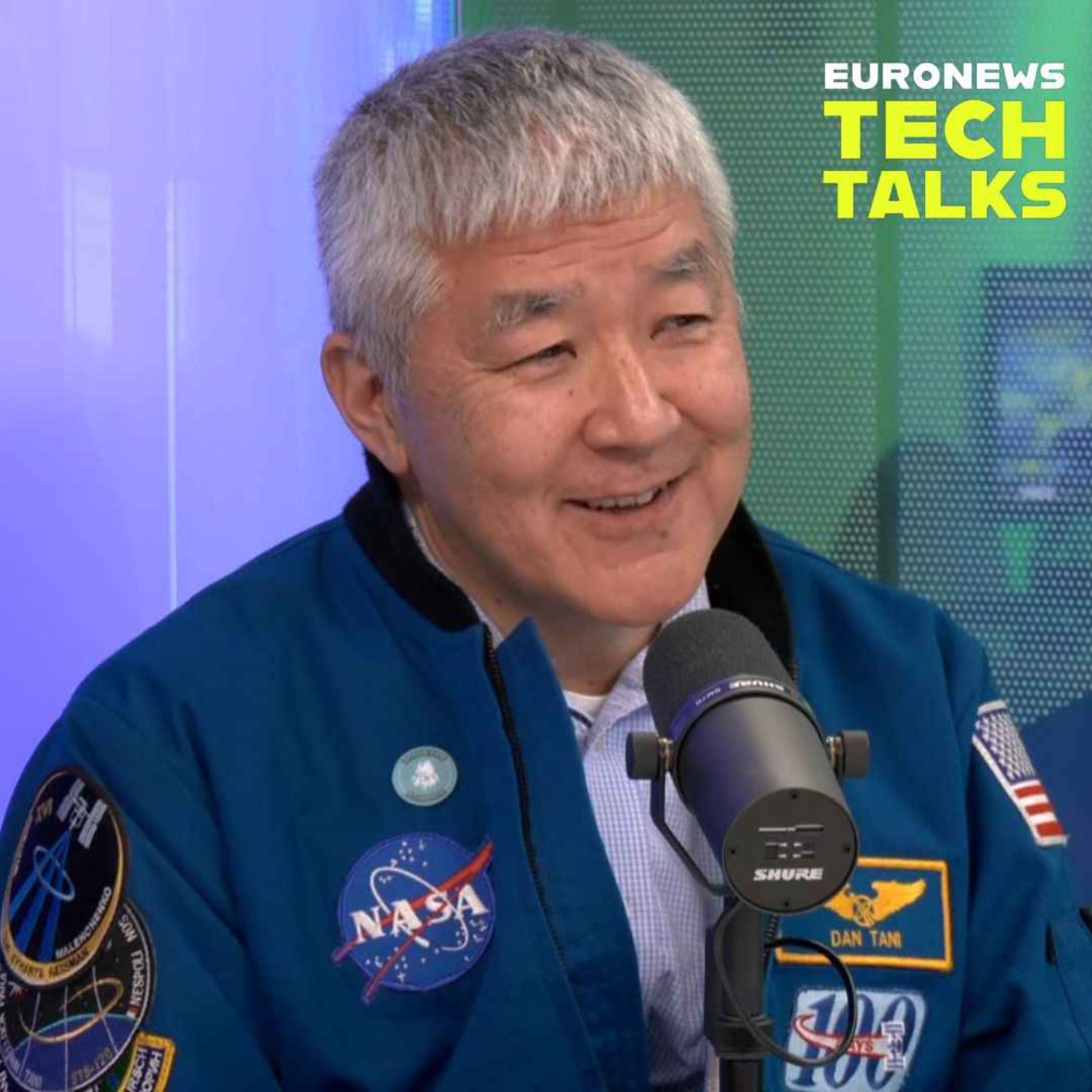
Daniel Tani spent over 130 days in space, most of which were on the International Space Station (ISS), and he conducted six extra-vehicular activities, also known as space walks. As a child, he did not want to become an astronaut, but life and career choices got him into orbit as a NASA astronaut.
Tani sits down with Euronews Tech Talks to share his experience as an astronaut, his thoughts on the current situation in space, the future of the ISS and how to enter the space sector.
Do you want to reach out to Euronews Tech Talks? Email alice.carnevali@euronews.com.
Euronews Tech Talks goes beyond discussions to explore the impact of new technologies on our lives. With explanations, engaging Q&As, and lively conversations, the podcast provides valuable insights into the intersection of technology and society.
Hosted on Acast. See acast.com/privacy for more information.
Is Europe’s space infrastructure ready for threats?
There’s momentum in Europe toward space defence, but are European space systems advanced enough to counter cyber threats?
To answer this and more of the questions you submitted to us, Euronews Tech Talks speaks with Giulia Pavesi, lead of security and defence at the European Space Policy Institute (ESPI), and Jean‑Luc Trullemans, head of the European Space Security and Education Centre at the European Space Agency (ESA).
Do you want to reach out to Euronews Tech Talks? Email alice.carnevali@euronews.com.
Euronews Tech Talks goes beyond discussions to explore the impact of new technologies on our lives. With explanations, engaging Q&As, and lively conversations, the podcast provides valuable insights into the intersection of technology and society.
Hosted on Acast. See acast.com/privacy for more information.
How to track a spy satellite
The first time our podcast producer met Marco Langbroek in September 2025, he told her always to carry cash. That’s because financial transactions, which rely on satellites, could be disrupted by what he is seeing in space.
A lecturer of space situational awareness at TU Delft in the Netherlands, Langbroek is an expert in tracking spy satellites.
Six months on, is he more worried or less? In this episode, we find out.
Do you want to reach out to Euronews Tech Talks? Email alice.carnevali@euronews.com.
Euronews Tech Talks goes beyond discussions to explore the impact of new technologies on our lives. With explanations, engaging Q&As, and lively conversations, the podcast provides valuable insights into the intersection of technology and society.
Hosted on Acast. See acast.com/privacy for more information.
A political space: Satellites as instruments of space defence
As space becomes increasingly militarised, what role do satellites play, and where does the EU position itself?
Euronews Tech Talks talks to researcher Luciano Anselmo, Geosat CEO Francisco Vilhena da Cunha, and EUSPA executive director Rodrigo da Costa to answer these and more questions.
Do you want to reach out to Euronews Tech Talks? Email alice.carnevali@euronews.com.
Euronews Tech Talks goes beyond discussions to explore the impact of new technologies on our lives. With explanations, engaging Q&As, and lively conversations, the podcast provides valuable insights into the intersection of technology and society.
Hosted on Acast. See acast.com/privacy for more information.
Is it safe to use AI chatbots for therapy?
Little is still known about the relationship between humans, therapy, and AI chatbots, yet these tools are being used by some people seeking quick psychological support. What are the risks, and are there any benefits?
Euronews Tech Talks spoke with Charlotte Blease, a philosopher and healthcare researcher, and Tom Van Daele, clinical psychologist and research coordinator in psychology and technology at Thomas More University of Applied Sciences in Mechelen, Belgium.
Do you want to reach out to Euronews Tech Talks? Email alice.carnevali@euronews.com.
Therapy - AI
Euronews Tech Talks goes beyond discussions to explore the impact of new technologies on our lives. With explanations, engaging Q&As, and lively conversations, the podcast provides valuable insights into the intersection of technology and society.
Hosted on Acast. See acast.com/privacy for more information.
Art in the age of AI: Is creativity still human?
If you have been tempted to transform one of your photos into a Studio Ghibli–style illustration with ChatGPT, you should sit down and listen to this podcast.
In this second special episode of Euronews Tech Talks on artificial intelligence (AI), we sit down with artist Sofia Crespo, comic book artist Francesco Archidiacono, and Eleonora Lima, lecturer and researcher in digital humanities at King’s College London, to investigate the relationship between AI and art.
Do you want to reach out to Euronews Tech Talks? Email alice.carnevali@euronews.com.
Euronews Tech Talks goes beyond discussions to explore the impact of new technologies on our lives. With explanations, engaging Q&As, and lively conversations, the podcast provides valuable insights into the intersection of technology and society.
Hosted on Acast. See acast.com/privacy for more information.
Can we reduce AI’s environmental cost?
Artificial intelligence might seem invisible, yet it has a significant environmental impact — one that is difficult to quantify due to companies' lack of transparency with their data.
So, to what extent should we be worried? Is there a way to reduce the environmental cost of AI?
To answer this question and unpack the relationship between AI and the environment, Euronews Tech Talks sits down with Jonathan Niesel, leader of the information technology department at Greenpeace Germany and Maja Kirkeby, researcher in the energy consumption of software at Roskilde University in Denmark.
Do you want to reach out to Euronews Tech Talks? Email alice.carnevali@euronews.com.
Euronews Tech Talks goes beyond discussions to explore the impact of new technologies on our lives. With explanations, engaging Q&As, and lively conversations, the podcast provides valuable insights into the intersection of technology and society.
Hosted on Acast. See acast.com/privacy for more information.
A robot to counter children’s loneliness
Euronews Tech Talks sits down with Karen Dolva, co-founder and former CEO of the Norwegian tech company No Isolation, whose robots help children with medical conditions and social difficulties attend school.
Do you want to reach out to Euronews Tech Talks? Email alice.carnevali@euronews.com
Euronews Tech Talks goes beyond discussions to explore the impact of new technologies on our lives. With explanations, engaging Q&As, and lively conversations, the podcast provides valuable insights into the intersection of technology and society.
Hosted on Acast. See acast.com/privacy for more information.
Can robots grow food on Earth and in space?
Robotics is making its way into agriculture, helping address challenges such as chemical use and labour shortages. What are the potentials? What are the challenges?
In this episode, we travel to Oslo to meet Lars Grimstad, CTO and co-founder of the agri-tech company Saga Robotics. We also hear from professors Stefano Stramigioli and Ioannis Athanasiadis, as well as engineers Giorgio Boscheri and Cesare Lobascio, about how robots are transforming agriculture, both on Earth and in space.
Do you want to reach out to Euronews Tech Talks? Email alice.carnevali@euronews.com.
Video: https://www.youtube.com/watch?v=JfBD7ohBdCo
Euronews Tech Talks goes beyond discussions to explore the impact of new technologies on our lives. With explanations, engaging Q&As, and lively conversations, the podcast provides valuable insights into the intersection of technology and society.
Hosted on Acast. See acast.com/privacy for more information.
Will robots do our dishes in 2030?
How is AI transforming robotics? Will robots ever replace doctors or come into our homes? In this episode of Euronews Tech Talks, we put these and more of your questions to Kai Olav Ellefsen, associate professor at the University of Oslo.
Do you want to reach out to Euronews Tech Talks? Email alice.carnevali@euronews.com.
Video: https://www.euronews.com/video/2025/11/27/qa-how-will-robotics-shape-our-future-euronews-tech-talks
Euronews Tech Talks goes beyond discussions to explore the impact of new technologies on our lives. With explanations, engaging Q&As, and lively conversations, the podcast provides valuable insights into the intersection of technology and society.
Hosted on Acast. See acast.com/privacy for more information.
To mine or not to mine in space?
We hear more and more about space mining projects—companies are interested in mining asteroids, and the European Commission is exploring the idea of mining the Moon for critical raw materials. But what would be mined? How? And would it be ethical and legal?
In this episode, Euronews Tech Talks sits down with several experts to discuss these questions: Ian Crawford, a professor of planetary science at the University of London; Jill Stuart, an academic at the London School of Economics; Pierfrancesco Biasetti, a researcher at the Summer School in Space Ethics at the University of Padua; Erik Persson, a philosophy professor at Lund University; and Kathryn Halder, director of the European Space Resources Innovation Centre (ESRIC).
Do you want to reach out to Euronews Tech Talks? Email alice.carnevali@euronews.com.
Euronews Tech Talks goes beyond discussions to explore the impact of new technologies on our lives. With explanations, engaging Q&As, and lively conversations, the podcast provides valuable insights into the intersection of technology and society.
Hosted on Acast. See acast.com/privacy for more information.
Space-based solar energy: Reality or science fiction?
Although engineers began developing space-based solar energy technology in the 1960s, it still hasn’t become a reality. Why?
In this episode, Euronews Tech Talks tries to answer this question by speaking with Sanjay Vijendran, co-founder and CTO of TerraSpark; Francesco Contino, professor at the school of engineering at UC Louvain; and Wei He, senior lecturer in engineering at King’s College London.
Important: The European Space Agency (ESA) provided Euronews Next with the Solaris documents after the publication of the episode. More details can be found in the episode’s article.
Do you want to reach out to Euronews Tech Talks? Email alice.carnevali@euronews.com
Euronews Tech Talks goes beyond discussions to explore the impact of new technologies on our lives. With explanations, engaging Q&As, and lively conversations, the podcast provides valuable insights into the intersection of technology and society.
Hosted on Acast. See acast.com/privacy for more information.
Could NASA really put a nuclear reactor on the Moon by 2030?
NASA’s decision to speed up plans for building a nuclear reactor on the Moon has raised questions about the United States’ broader space strategy and renewed curiosity about the use of nuclear energy beyond Earth.
In this episode of Euronews Tech Talks, we address these questions with professor Simon Middleburgh, co-director of the Nuclear Futures Institute at the University of Bangor (UK), Alfredo Carpineti, astrophysicist and senior science writer at IFL Science, and Francesco Lodi, researcher at ENEA (Italy).
Do you want to reach out to Euronews Tech Talks? Email alice.carnevali@euronews.com
Euronews Tech Talks goes beyond discussions to explore the impact of new technologies on our lives. With explanations, engaging Q&As, and lively conversations, the podcast provides valuable insights into the intersection of technology and society.
Hosted on Acast. See acast.com/privacy for more information.
A world without PFAS
In this final chapter of our journey into the world of PFAS, we speak with Fajer Mushtaq, whose company Oxyle is working to contain and destroy PFAS in wastewater, and with Miika Nikinmaa and Diana Lau, who are developing alternatives for food packaging and textiles through the ZeroF project.
Do you want to reach out to Euronews Tech Talks? Email alice.carnevali@euronews.com
Euronews Tech Talks goes beyond discussions to explore the impact of new technologies on our lives. With explanations, engaging Q&As, and lively conversations, the podcast provides valuable insights into the intersection of technology and society.
Hosted on Acast. See acast.com/privacy for more information.
Life in Zwijndrecht: A European PFAS hotspot
What is it like to live in one of Europe’s hotspots for PFAS contamination? Jeroen Van Reeth, a resident of Zwijndrecht—the Belgian town affected by PFAS produced by the chemical company 3M—opens his home to Euronews Tech Talks to share his experience.
We, then, speak with experts Jacob de Boer, Hans Peter Arp and Madeleine Bussemaker to uncover if and how it is possible to contain and destroy “forever chemicals”.
Do you want to reach out to Euronews Tech Talks? Email alice.carnevali@euronews.com
Euronews Tech Talks goes beyond discussions to explore the impact of new technologies on our lives. With explanations, engaging Q&As, and lively conversations, the podcast provides valuable insights into the intersection of technology and society.
Hosted on Acast. See acast.com/privacy for more information.
Q&A: PFAS, what’s all the fuss?
Per- and polyfluoroalkyl substances (PFAS) are man-made chemicals widely used in the industry, but potentially harmful to human health. They can be found on pizza boxes, ski clothing, and sanitary pads, but some studies associate them with multiple kinds of health problems. In this Q&A episode, we explore PFAS by putting your questions to chemist Martin Scheringer, research scientist at the Swiss Federal Institute of Technology (ETH Zurich).
The Map of Forever Pollution: https://foreverpollution.eu/map/
Do you want to reach out to Euronews Tech Talks? Email alice.carnevali@euronews.com
Euronews Tech Talks goes beyond discussions to explore the impact of new technologies on our lives. With explanations, engaging Q&As, and lively conversations, the podcast provides valuable insights into the intersection of technology and society.
Hosted on Acast. See acast.com/privacy for more information.
Why do athletes dope, and at what cost? Ex-pro cyclist Bo Hamburger explains
For this season finale of Euronews Tech Talks, former professional cyclist Bo Hamburger reflects on his use of EPO in the 1990s and early 2000s, offering insights into how doping works, why athletes turn to it, and its potential health effects. We’re also joined by April Henning, Associate Professor of International Sport Management at the Edinburgh Business School, Heriot-Watt University, and Dominic Sagoe, Professor of Psychology at the University of Bergen in Norway and founder of the Human Enhancement and Body Image Lab.
Euronews Tech Talks will return in September — enjoy your summer!
Credits for the intro race audio in San Sebastián:
Funnycycling: 1997 World Cycling Championships – Campeonato Mundial de Ciclismo – San Sebastián – Brochard Courtesy (2015)
Euronews Tech Talks goes beyond discussions to explore the impact of new technologies on our lives. With explanations, engaging Q&As, and lively conversations, the podcast provides valuable insights into the intersection of technology and society.
Hosted on Acast. See acast.com/privacy for more information.
Can AI help detect doping in sports?
Researchers are developing AI programmes to make doping detection more effective, faster, and cheaper. How do these systems work? What challenges do their creators face?
Euronews Tech Talks sits down with Wolfgang Maass, Professor of Business Informatics and Computer Science at Saarland University and Francesco Botrè, Director of the WADA-accredited anti-doping laboratory in Rome, to answer these questions.
Credits: Oscars, "Icarus" wins Best Documentary Feature, YouTube.
Euronews Tech Talks goes beyond discussions to explore the impact of new technologies on our lives. With explanations, engaging Q&As, and lively conversations, the podcast provides valuable insights into the intersection of technology and society.
Hosted on Acast. See acast.com/privacy for more information.
What is doping, and how do athletes get away with it?
What is doping? How do these prohibited substances work? In this Q&A episode, Euronews Tech Talks explores this topic with Andrea Petróczi, Professor of Public Health at Kingston University.
Credit for Lance Armstrong interview: Oprah Winfrey Network (OWN). “Oprah and Lance Armstrong: The Worldwide Exclusive”. Aired January 17–18, 2013.
Euronews Tech Talks goes beyond discussions to explore the impact of new technologies on our lives. With explanations, engaging Q&As, and lively conversations, the podcast provides valuable insights into the intersection of technology and society.
Hosted on Acast. See acast.com/privacy for more information.
From crisis to cure: Cleaning the world's oceans
Plastic and chemical pollution in marine environments pose a major threat to the health of our oceans. Euronews Tech Talks interviews two experts to understand the scale of the problem and explore the technological solutions that could help address it. Simon Bernard, CEO of Plastic Odyssey, is on a world tour to collect solutions to plastic pollution; Anneliese Hodge is a researcher working on the impact sunscreen has on the marine environment.
The next episode of Euronews Tech Talks will delve into the world of doping. If you have a scientific question about it, please reach out to alice.carnevali@euronews.com.
Euronews Tech Talks goes beyond discussions to explore the impact of new technologies on our lives. With explanations, engaging Q&As, and lively conversations, the podcast provides valuable insights into the intersection of technology and society.
Hosted on Acast. See acast.com/privacy for more information.
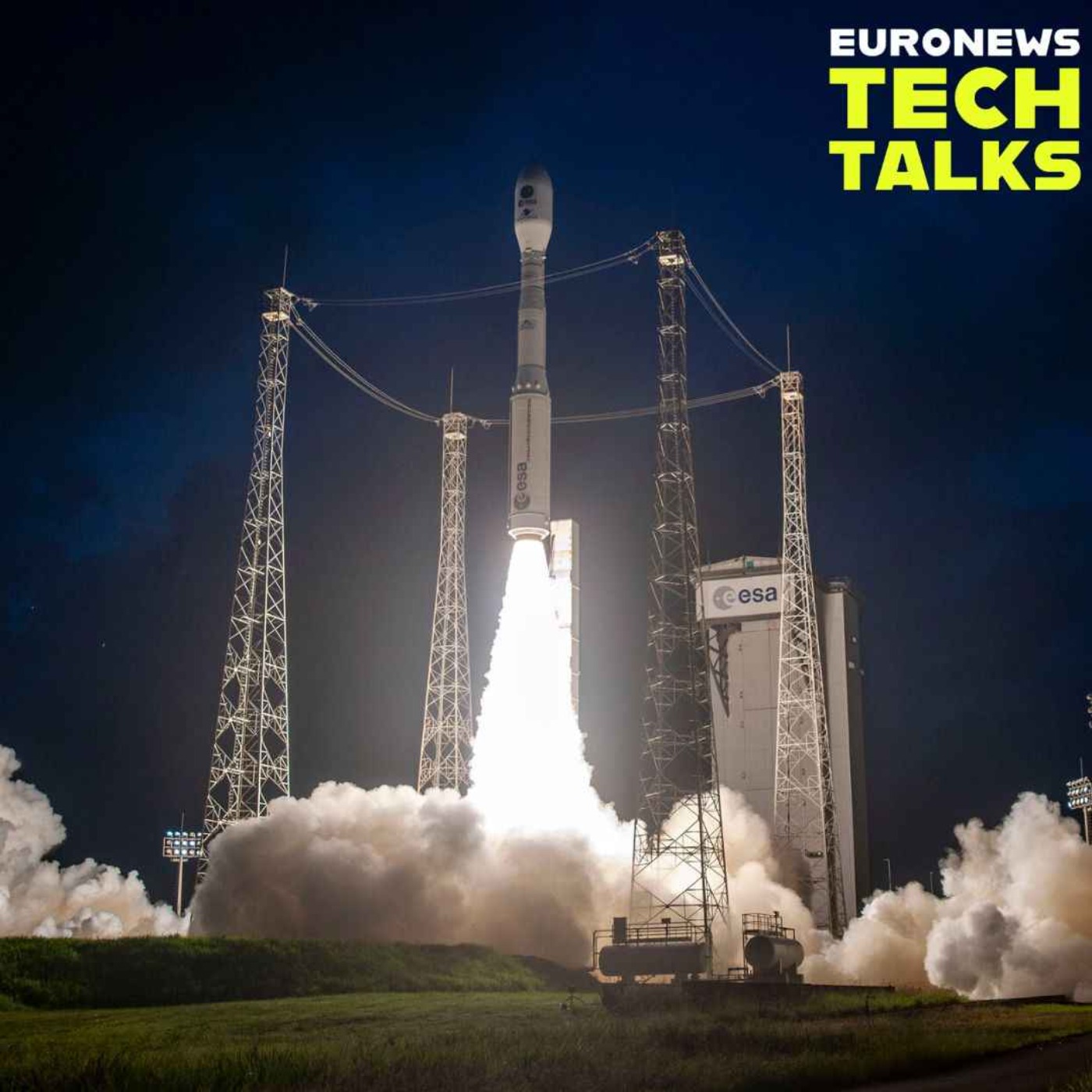
ESA's Biomass satellite: The D-Day
What happens on a satellite’s launch day? What are the thoughts and emotions of those behind the mission?
In this second of two special episodes on the European Space Agency’s Biomass satellite, Euronews Tech Talks takes you to Kourou for a behind-the-scenes look at the launch to answer these questions.
Podcast cover credits: ESA-CNES-ARIANESPACE/Optique vidéo du CSG–S. Martin
Euronews Tech Talks goes beyond discussions to explore the impact of new technologies on our lives. With explanations, engaging Q&As, and lively conversations, the podcast provides valuable insights into the intersection of technology and society.
Hosted on Acast. See acast.com/privacy for more information.
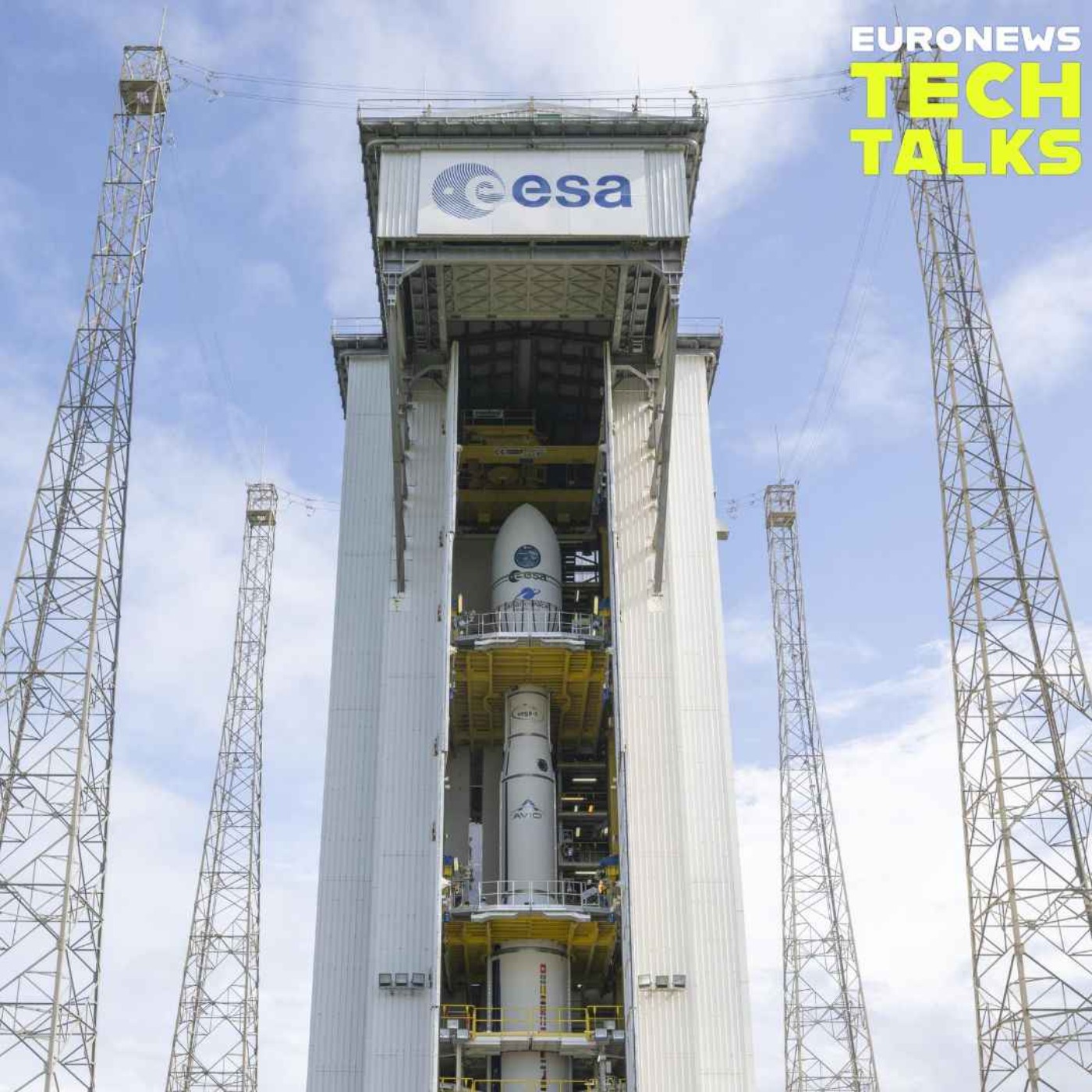
Uncovering forests’ mysteries from space: ESA’s Biomass satellite
The European Space Agency (ESA)’s Biomass satellite is designed to measure the amount of carbon stored in tropical forests. It was launched from Europe’s spaceport in Kourou, on 29 April 2025.
In the first of two special episodes dedicated to the mission, Euronews Tech Talks takes you to French Guiana on the eve of the launch to explore what the satellite is designed to do and how people were feeling in the final hours before liftoff.
Credits podcast cover: ESA - M. Pédoussaut/Zetapress
Euronews Tech Talks goes beyond discussions to explore the impact of new technologies on our lives. With explanations, engaging Q&As, and lively conversations, the podcast provides valuable insights into the intersection of technology and society.
Hosted on Acast. See acast.com/privacy for more information.
Should the EU relax regulations on next-generation GMOs?
The deregulation of a new generation of genetically modified organisms is stirring debate across the European Union. Euronews Tech Talks dives into the controversy, exploring whether the EU should ease restrictions on cutting-edge genetic technologies, by listening to both sides of the debate.
Euronews Tech Talks goes beyond discussions to explore the impact of new technologies on our lives. With explanations, engaging Q&As, and lively conversations, the podcast provides valuable insights into the intersection of technology and society.
Hosted on Acast. See acast.com/privacy for more information.
NGTs: Why all the buzz?
In today’s episode, we’ll dive into the world of new genomic techniques and their application in the agricultural sector.
Once again, our journey will take us to the UK, more precisely in Hertfordshire, a county in southeast England. Here, a group of scientists is running Europe’s first gene-edited wheat field trial created through CRISPR-Cas.
We’ll quickly realise that just like their ancestors, NGTs are a highly divisive topic.
Euronews Tech Talks goes beyond discussions to explore the impact of new technologies on our lives. With explanations, engaging Q&As, and lively conversations, the podcast provides valuable insights into the intersection of technology and society.
Hosted on Acast. See acast.com/privacy for more information.
Q&A: Uncovering GMOs
Genetically Modified Organisms (GMOs) are widely discussed, yet few truly understand what they are and how they work. In this Q&A episode of Euronews Tech Talks, we answer your questions with Josep Casacuberta, a researcher at the Centre for Research in Agricultural Genomics in Barcelona and chair of the GMO panel at EFSA.
Euronews Tech Talks goes beyond discussions to explore the impact of new technologies on our lives. With explanations, engaging Q&As, and lively conversations, the podcast provides valuable insights into the intersection of technology and society.
Hosted on Acast. See acast.com/privacy for more information.
Can observing Earth from space help tackle climate change? A conversation with ESA expert Jean-Christophe Gros
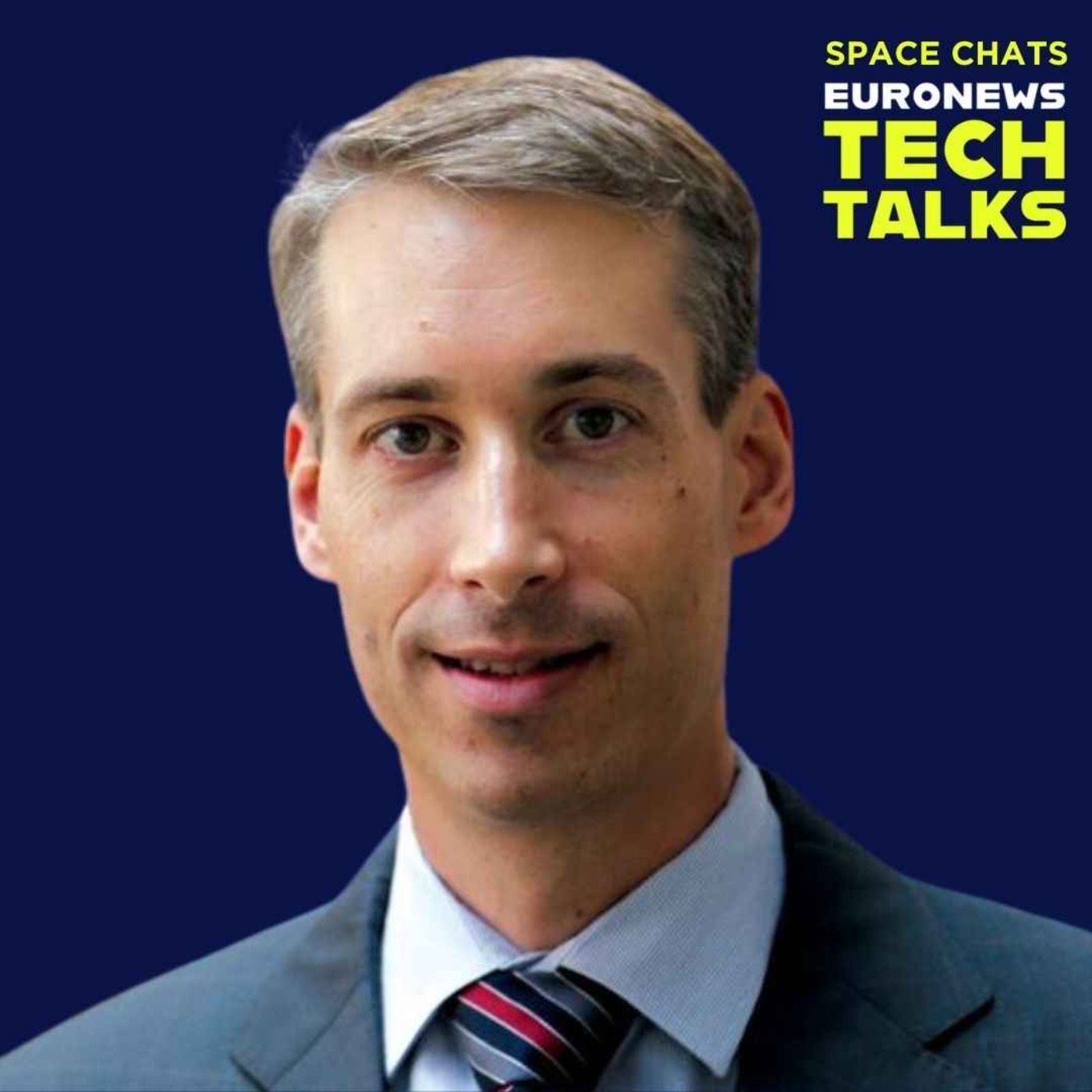
When tackling a problem, we’re often told to step back and look at it from a different perspective. Earth observation from space does just that, providing crucial data on our planet’s biggest challenges. In this episode of Euronews Tech Talks, we explore this topic with Jean-Christophe Gros, EU Programme Coordinator at ESA.
Euronews Tech Talks goes beyond discussions to explore the impact of new technologies on our lives. With explanations, engaging Q&As, and lively conversations, the podcast provides valuable insights into the intersection of technology and society.
Hosted on Acast. See acast.com/privacy for more information.